

Olive Seed Company
Milkweed 'Apollo Orange'
Milkweed 'Apollo Orange'
Couldn't load pickup availability
Butterfly Weed Apollo Orange (Asclepias curassavica)
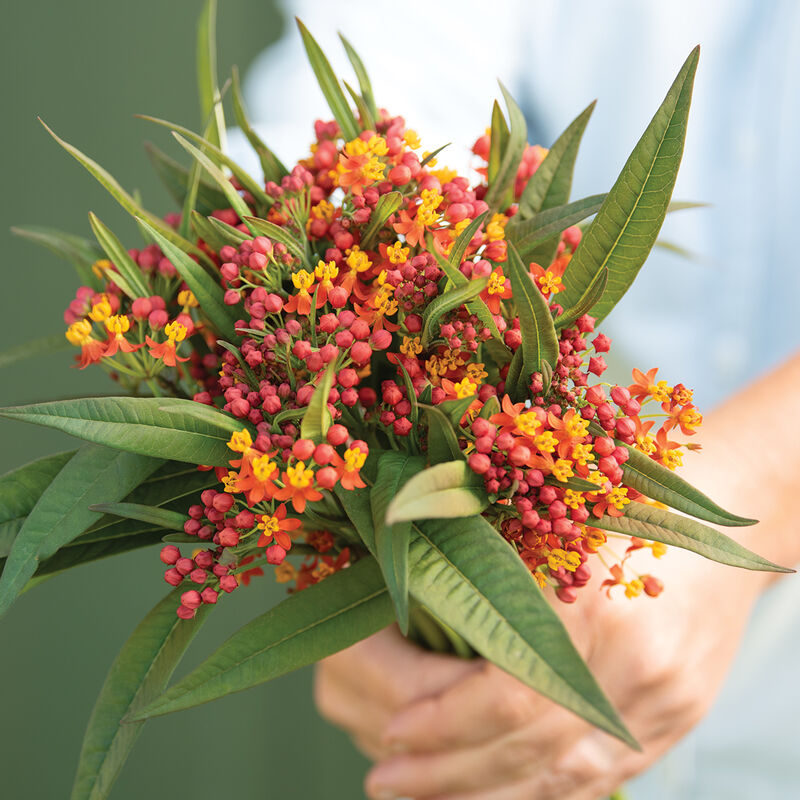
Like a flame that never fades, Apollo Orange brings a vivid, sun-kissed energy to the summer garden. Each upright stem bears clusters of bright tangerine blooms, their narrow petals flaring around golden hearts. The slender, glossy foliage frames the blossoms in a way that feels both wild and refined—fiery yet graceful, like sunlight captured in bloom.
A favourite among butterflies and summer pollinators, Apollo Orange lends a tropical warmth to borders and bouquets alike. Its vivid tones pair beautifully with deep magenta zinnias for a lively contrast, or with creamy strawflowers to temper the heat with soft texture. A bold, exuberant presence that celebrates the height of summer and the lingering warmth of early autumn.
DETAILS:
QTY: 50
TYPE: Tender Perennial
SITE: Full Sun
DEPTH: 1/4"
GERMINATION: 14 - 21 days at 18 - 21°C
HEIGHT: 34 - 38"
MATURITY: 90 - 100 Days
SPACING: 12 -24"
PINCH: No
HOW TO GROW:
No stratification is required for this species.
Transplant (Recommended): Sow indoors 7-9 weeks before the last expected frost. Sow seeds 1/4 inch deep into a standard seed starting mix. This plant quickly develops a taproot upon germination. Do not allow the seedlings to become pot-bound at any time, as their health will rapidly deteriorate. Transplant seedlings into larger cell packs or 3-4 inch pots just 3-5 weeks after sowing. Harden off the plants and transplant them outdoors only after the last frost has passed and the soil has warmed.
Direct Seed: Can be direct sown in the fall (in mild climates) or in the spring after the last frost.
Soil, Fertilizing, and Watering: Tropical Milkweed prefers well-drained soil and is tolerant of many soil types, including poor, dry, or sandy conditions. Fertilizing is often unnecessary. If the soil is poor, use a balanced, slow-release fertilizer at planting. Avoid over-fertilizing with nitrogen, as this can make the foliage less suitable for Monarch caterpillars. Water regularly until the plant is established. Once mature, it is quite drought-tolerant, but consistent watering will ensure the leaves stay tender for caterpillars.
Maintenance and Tips: This plant is a host for Monarch caterpillars. Be prepared for the plant to be heavily eaten! In areas that do not experience freezing winters, it is important to cut Tropical Milkweed back to the ground in the fall or winter. This practice discourages Monarchs from overwintering and prevents the build-up of the parasite Ophryocystis elektroscirrha (OE).
Shipping & Returns
Shipping & Returns
-
Free Shipping
Free Shipping on all orders in Canada over $125.00