

Olive Seed Company
Hollyhock 'Chater's Rose'
Hollyhock 'Chater's Rose'
Couldn't load pickup availability
Chater’s Rose Double Hollyhock (Alcea rosea)
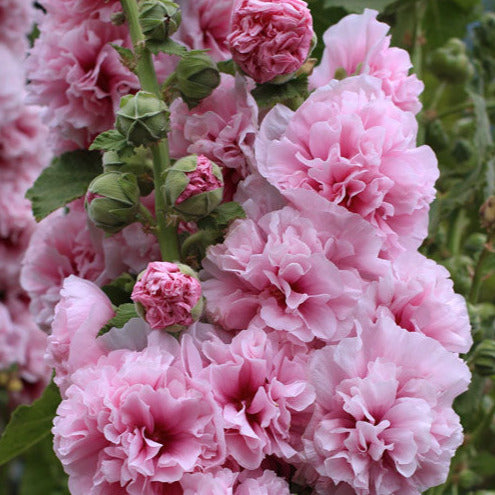
Chater’s Rose Double Hollyhock is a classic cottage garden favourite, celebrated for its romantic, fully double blooms in a soft, rosy pink. Each 3–4 inch flower opens slowly on tall, sturdy stalks reaching 5–7 feet, revealing lush, satiny petals layered like a peony. Its dramatic, upright presence makes it a natural showstopper at the back of borders, providing height, texture, and timeless charm to any garden.
Surprisingly resilient, this hollyhock thrives in full sun and tolerates dry conditions once established. Bees, butterflies, and other pollinators are irresistibly drawn to its abundant blooms, adding life and movement to the garden. A biennial or short-lived perennial, Chater’s Rose focuses on foliage the first year before producing magnificent flowers the second. If allowed to set seed, it often self-sows, returning gently each season to grace borders, fences, and cottage-style landscapes with elegance and romance. Also known as Double Hollyhock or Common Hollyhock.
DETAILS:
QTY: 40
TYPE: Biennial
SITE: Full Sun - Part Shade
DEPTH: 1/8"
GERMINATION: 10-14 Days at 15-21°C
HEIGHT: 60 - 84"
MATURITY: 75 - 90 days (Second season)
SPACING: 12"
PINCH: No
HOW TO GROW:
Transplant (recommended): Start seeds indoors in seedling trays 6–8 weeks before the last frost. Sow on the surface of the soil or cover lightly, as some light aids germination. Keep the soil consistently moist but not soggy. Harden off seedlings by gradually exposing them to outdoor conditions before transplanting outdoors after the risk of frost has passed.
Direct Sowing (alternative): Direct sowing can be done after the last frost, but germination may be slower and less reliable.
Pinching and Support: Hollyhocks typically do not require pinching. Deadheading spent flowers after the first flush of blooms can encourage reblooming in late summer to fall. Allow some flowers to go to seed in autumn if you want them to self-sow and return the following year. Taller varieties may require staking to prevent their heavy flower stalks from toppling over.
Soil Preference and Watering: Hollyhocks prefer full sun and well-drained soil. Avoid overhead watering to reduce the risk of fungal issues.
Fertilizing: Fertilizing is not typically necessary for hollyhocks. A single application of a balanced, all-purpose fertilizer at planting time is usually sufficient.
Harvesting: For bouquets, harvest stems when the flowers at the bottom of the stalk have begun to open.
Other Tips: Hollyhocks will focus on foliage and root development in the first season, with blooms appearing in the second year. They are ideal for borders, pollinator gardens, and cut flower production.
Shipping & Returns
Shipping & Returns
-
Free Shipping
Free Shipping on all orders in Canada over $125.00