

Olive Seed Company
Hollyhock 'Chater's Golden Yellow'
Hollyhock 'Chater's Golden Yellow'
Couldn't load pickup availability
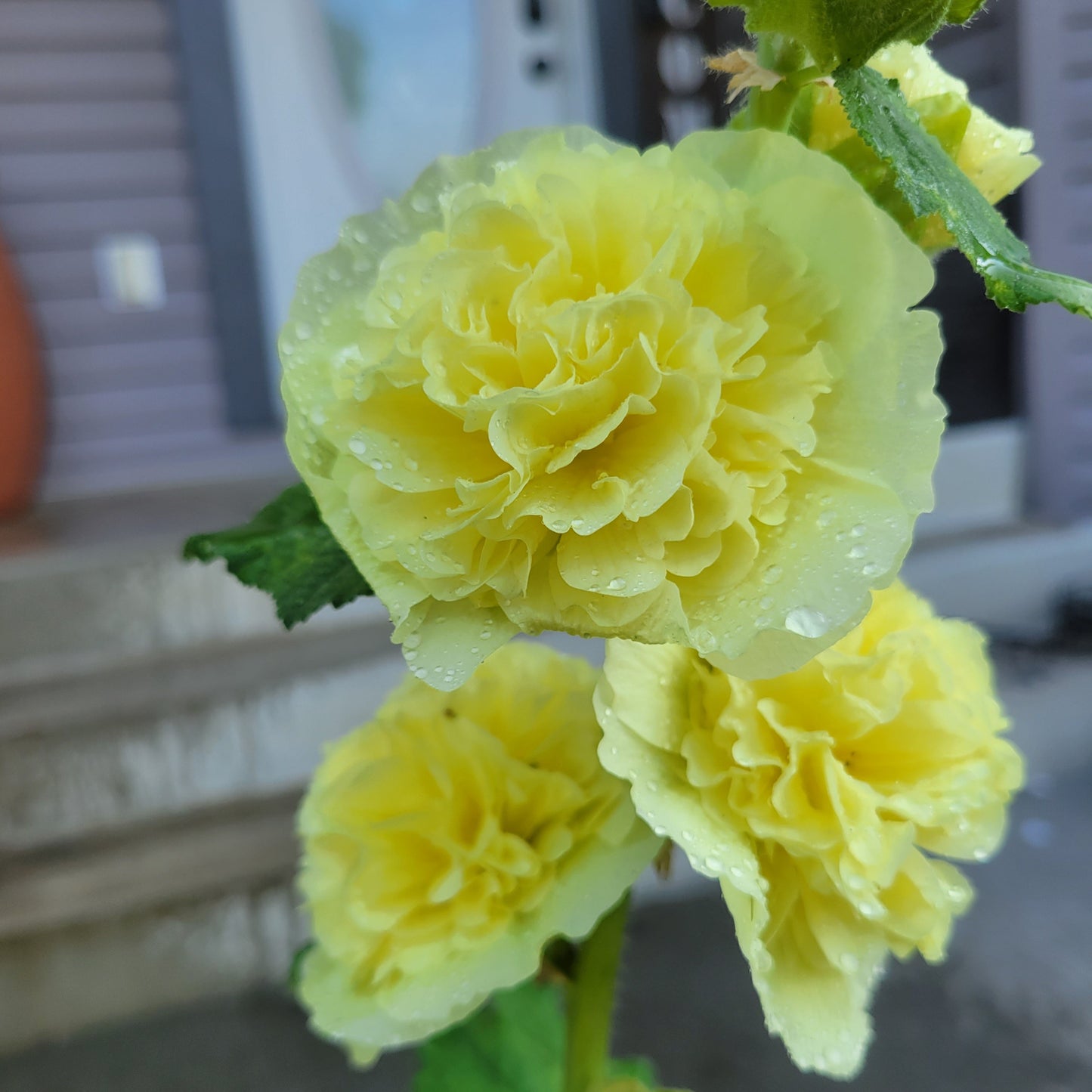
Chater’s Double Golden Yellow Hollyhock (Alcea rosea)
Sun-drenched and radiant, Chater’s Golden Yellow Double Hollyhock brings warmth and cheer to any garden with 3–4 inch fully double blooms in a brilliant golden yellow. Layered and ruffled like miniature peonies, the flowers open gradually along towering 5–7 foot stalks, creating a dramatic vertical display that draws bees, butterflies, and other pollinators in abundance. Its sunny hue adds a vibrant glow to cottage-style borders, fences, or mixed garden beds, pairing beautifully with soft pinks, creams, and purples for contrast.
A biennial or short-lived perennial, this hollyhock focuses on building a leafy base in the first year before erupting into its magnificent floral show the second. Cut back after flowering to encourage a possible second flush in late summer, or allow it to set seed for gentle self-sowing and naturalization. Easy to grow and endlessly striking, Chater’s Golden Yellow combines timeless charm, structure, and a joyful burst of sunshine for any garden space.
DETAILS:
QTY: 40
TYPE: Biennial
SITE: Full Sun - Part Shade
DEPTH: 1/8"
GERMINATION: 10-14 Days at 15-21°C
HEIGHT: 60 - 84"
MATURITY: 75 - 90 days (Second season)
SPACING: 12"
PINCH: No
HOW TO GROW:
Transplant (recommended): Start seeds indoors in seedling trays 6–8 weeks before the last frost. Sow on the surface of the soil or cover lightly, as some light aids germination. Keep the soil consistently moist but not soggy. Harden off seedlings by gradually exposing them to outdoor conditions before transplanting outdoors after the risk of frost has passed.
Direct Sowing (alternative): Direct sowing can be done after the last frost, but germination may be slower and less reliable.
Pinching and Support: Hollyhocks typically do not require pinching. Deadheading spent flowers after the first flush of blooms can encourage reblooming in late summer to fall. Allow some flowers to go to seed in autumn if you want them to self-sow and return the following year. Taller varieties may require staking to prevent their heavy flower stalks from toppling over.
Soil Preference and Watering: Hollyhocks prefer full sun and well-drained soil. Avoid overhead watering to reduce the risk of fungal issues.
Fertilizing: Fertilizing is not typically necessary for hollyhocks. A single application of a balanced, all-purpose fertilizer at planting time is usually sufficient.
Harvesting: For bouquets, harvest stems when the flowers at the bottom of the stalk have begun to open.
Other Tips: Hollyhocks will focus on foliage and root development in the first season, with blooms appearing in the second year. They are ideal for borders, pollinator gardens, and cut flower production.
Shipping & Returns
Shipping & Returns
-
Free Shipping
Free Shipping on all orders in Canada over $125.00